

Key Takeaways
1. Media Coverage Patterns
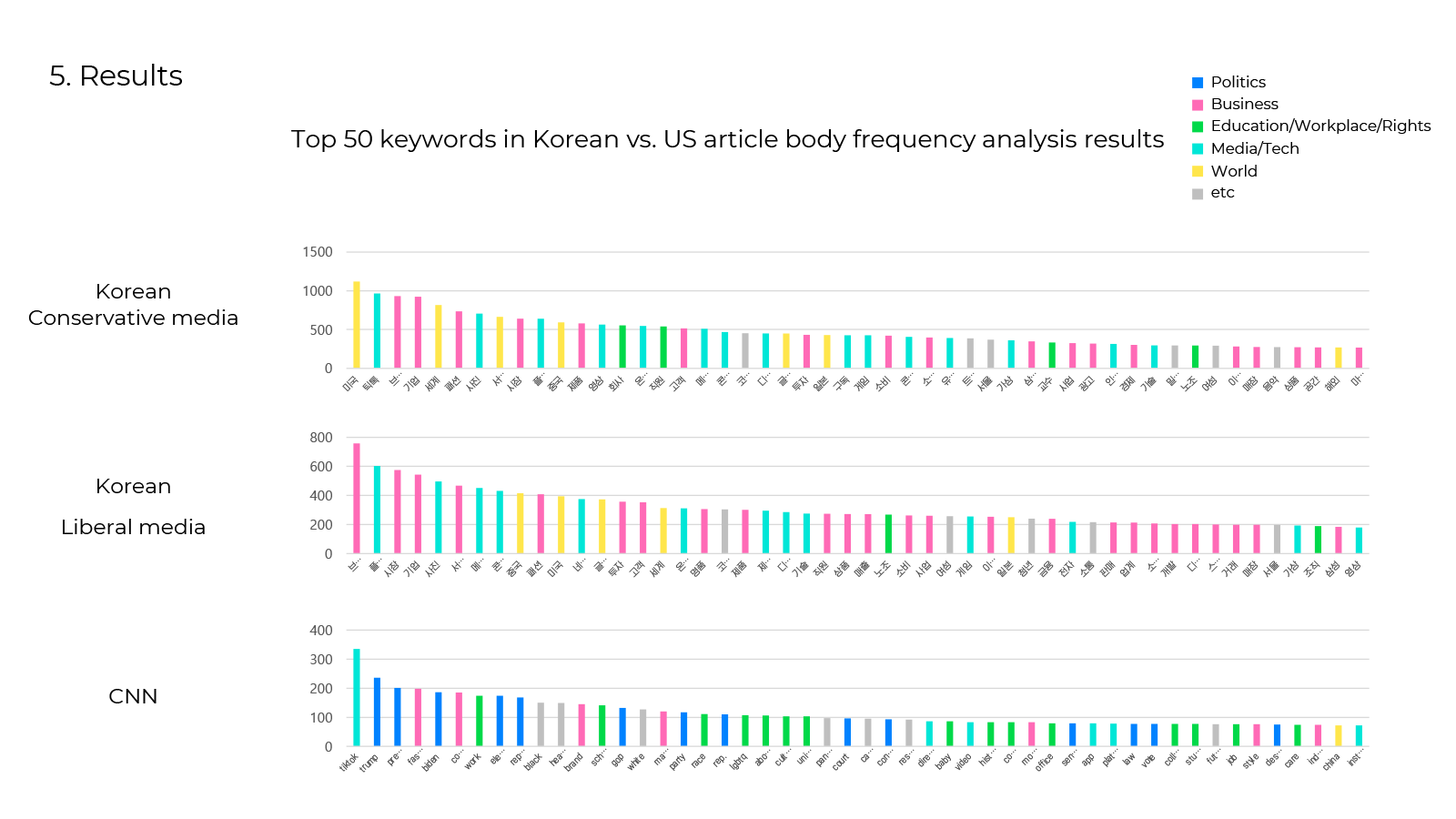
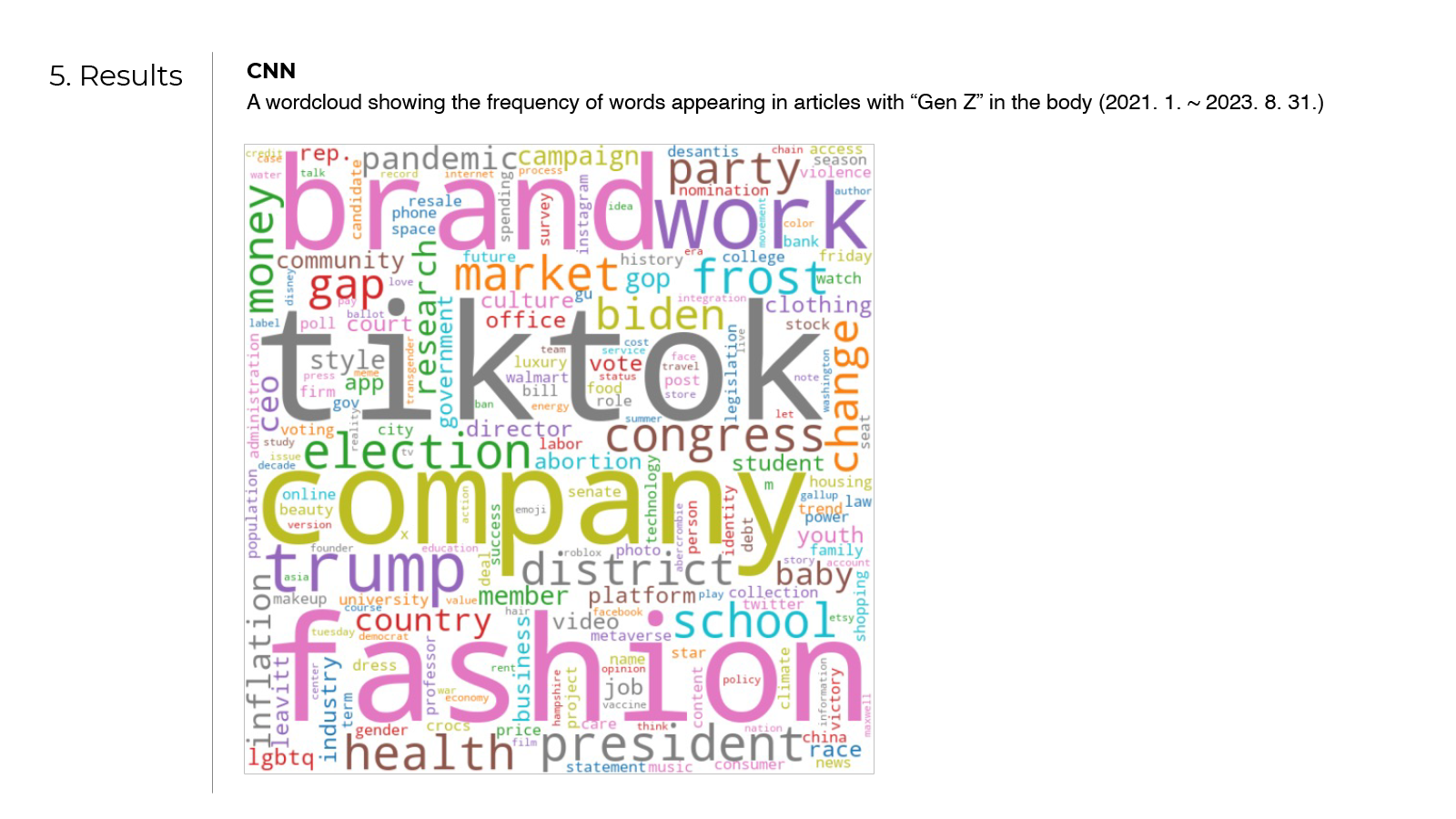
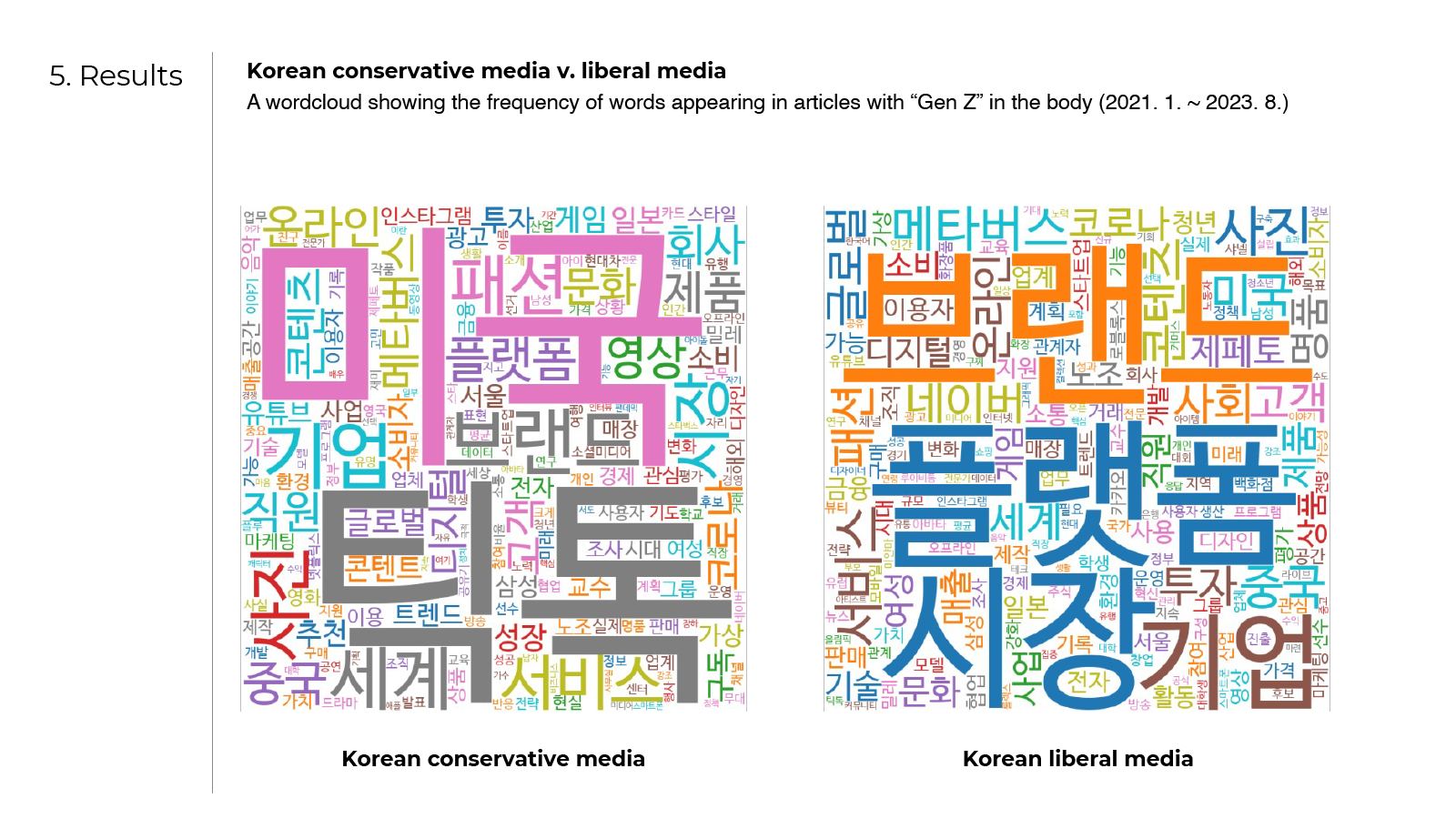
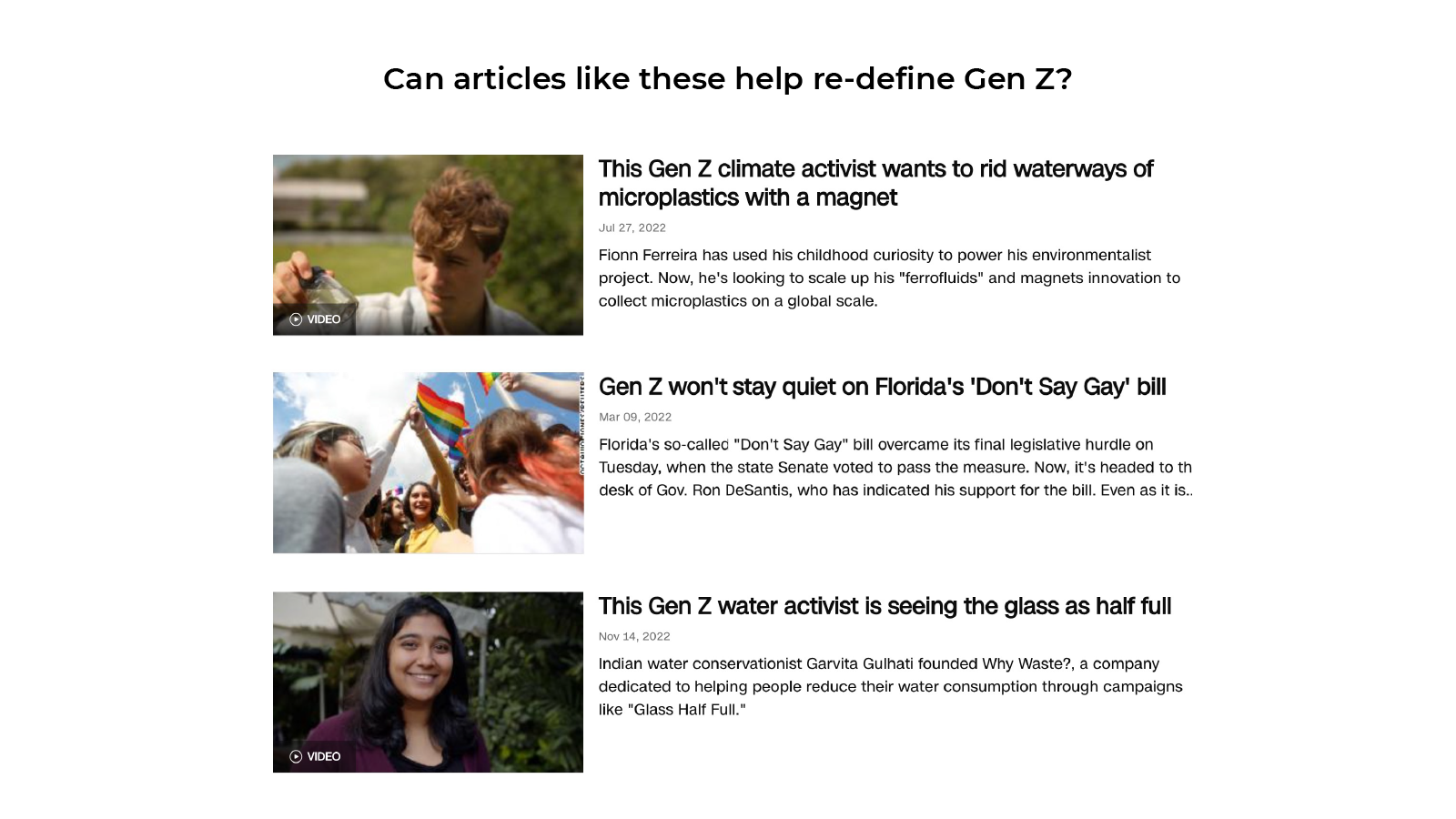
- Korean media emphasizes technology/consumer trends while U.S. media (CNN) focuses more on political engagement and social activism
- Significant disparity in political coverage: CNN actively connects Gen Z with political issues while Korean media shows minimal political association
2. Topic Distribution
- Korean Media: Dominated by technology (metaverse, platforms), brands, and consumer behavior
- U.S. Media: Balanced coverage across politics, social issues, education, and consumer trends
- Both regions' coverage suggests different priorities in generational discourse
3. Cultural Framing
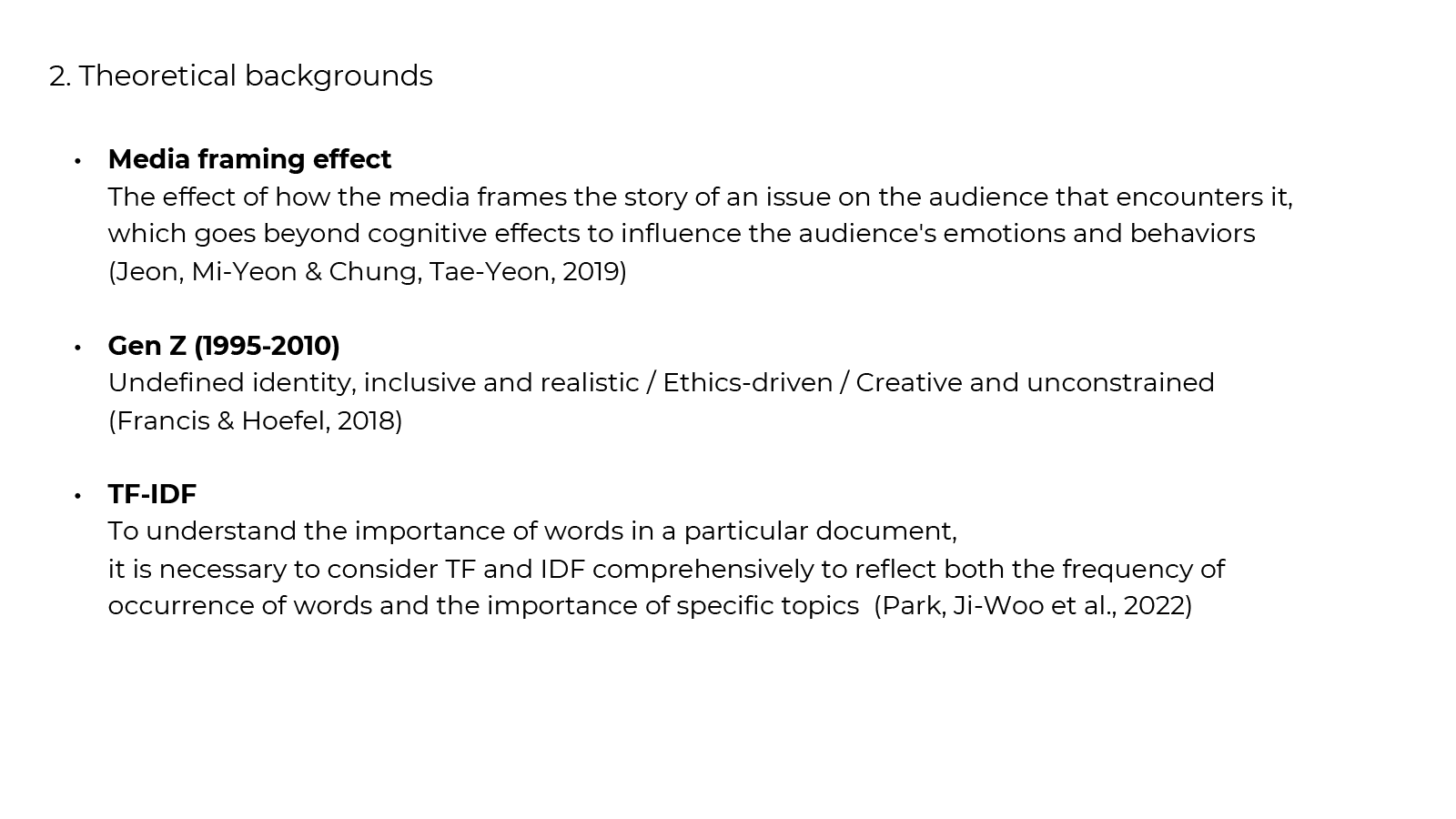
- Korean media tends to merge millennials and Gen Z (MZ Generation)
- U.S. media maintains distinct generational categories
- Korean coverage shows limited engagement with social issues (LGBTQ rights, environmental concerns)
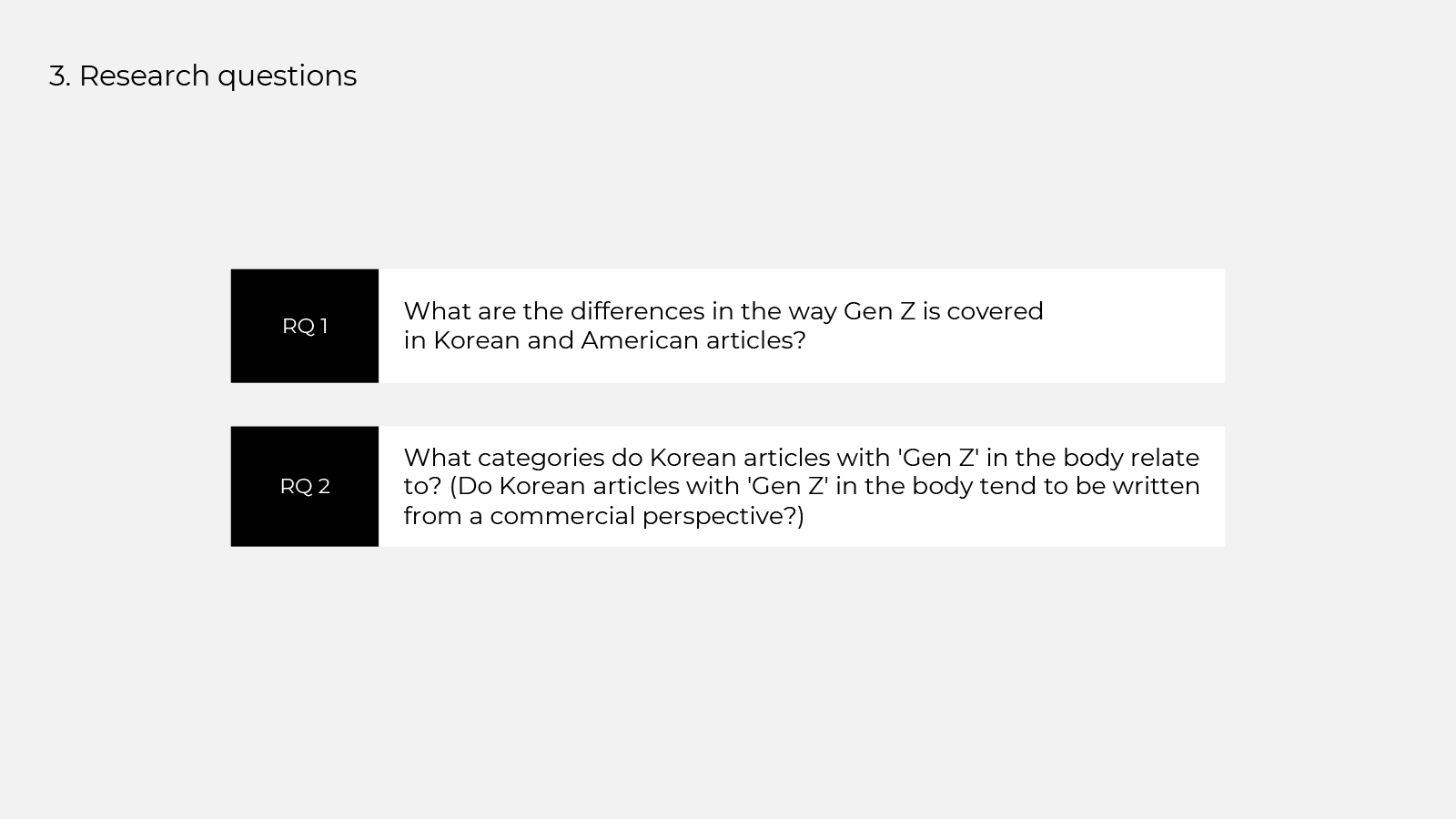
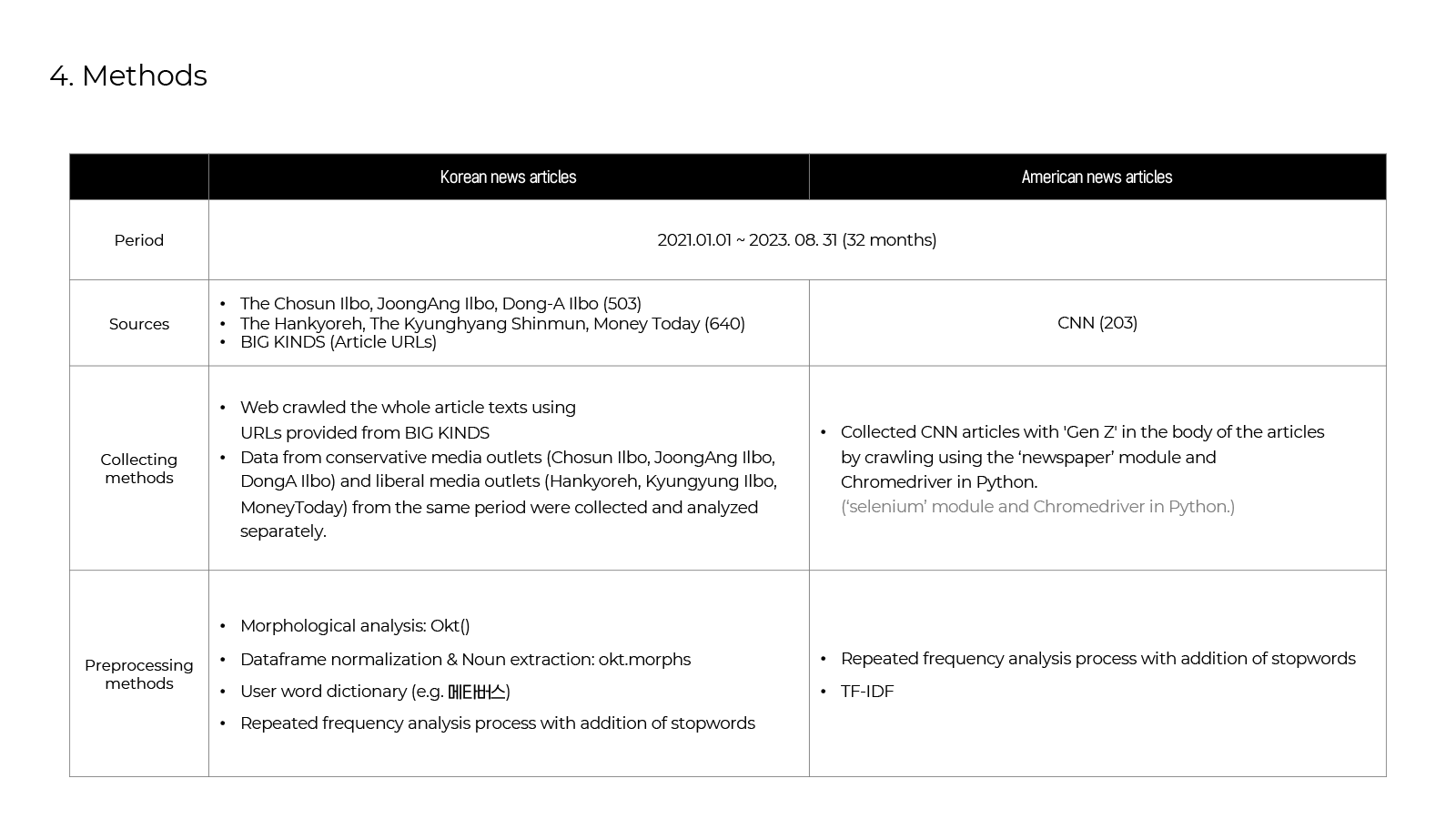
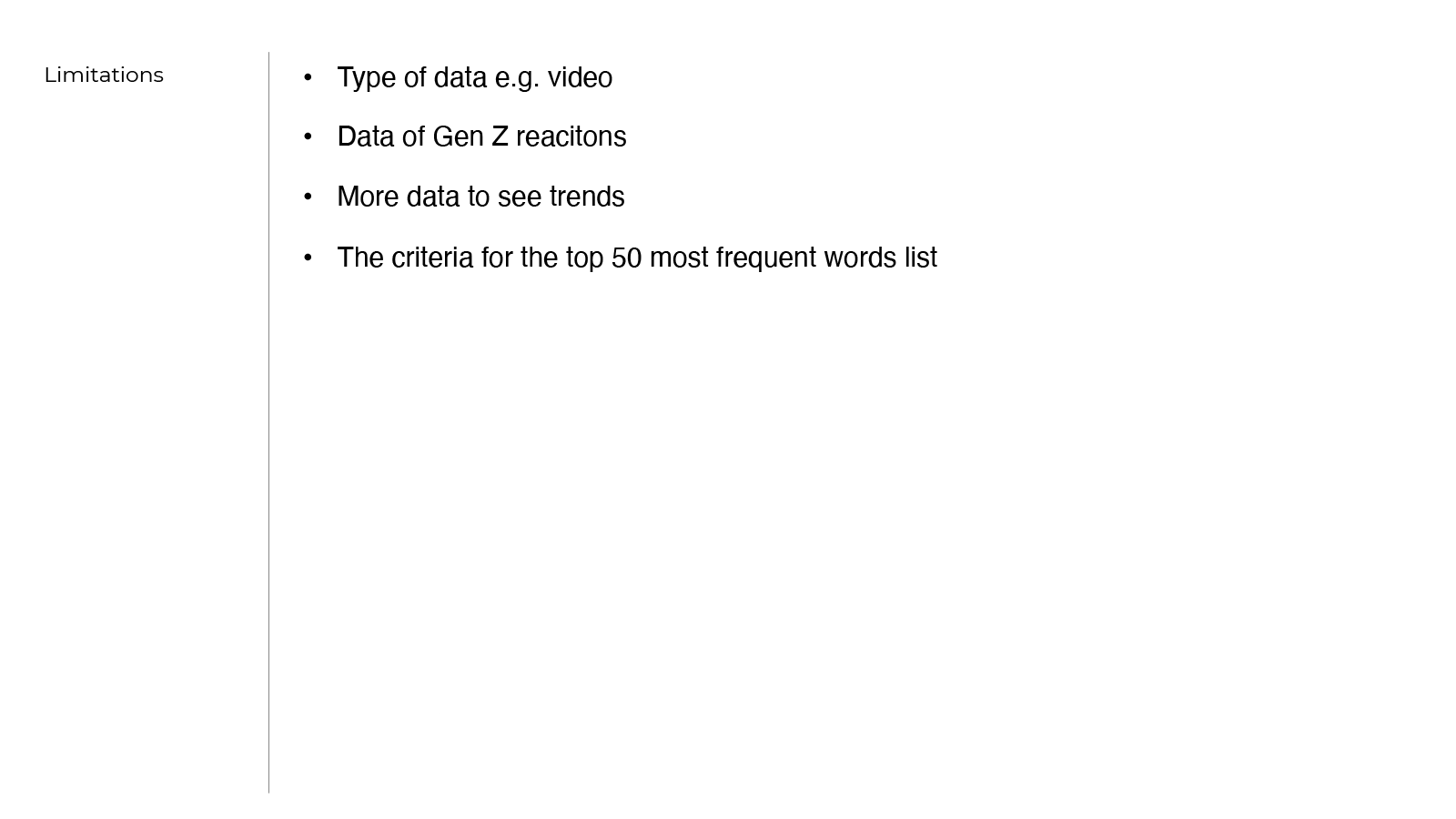
This study examines how Korean news media frame Generation Z compared to U.S. media coverage, investigating potential biases in representation. The research analyzed news articles from CNN (n=86) and Korean media outlets (n=396) over a one-year period, employing frequency analysis, word cloud generation, and topic modeling. Analysis revealed significant disparities: CNN frequently connected Generation Z with political engagement and social activism, while Korean media emphasized technology and consumer trends. Korean outlets predominantly used the combined term 'MZ Generation' and showed minimal coverage of political or social justice issues, suggesting limitations in youth perspective representation. The findings highlight the need for more diverse coverage of Generation Z in Korean media, while contributing to broader understanding of generational discourse in cross-cultural media contexts. Study limitations include the restricted time frame, volume variance across sources, and absence of social media data analysis.