“While I’ve heard of having a severe cold, what does it mean to have severe feminism…?”
The Elephant Book Club, a feminist reading group from Ewha Womans University’s Visual Design Department, combines relatable stories for contemporary Korean women with witty expressions and graphic artworks inspired by their readings. Though they meet only during breaks due to heavy coursework during the semester, they diligently document their discussions and transform them into art. We met with this group, formed just last year and preparing to publish their second journal.
What motivated you to form this reading group?
Eboshi: After overcoming the major hurdle of our graduation exhibition last year, I felt motivated to do something meaningful. Maya had always talked about wanting to create a feminist reading group, and the topic came up during our post-exhibition celebration. Right there, I said, ‘Well, why don’t we just do it?’ and we spontaneously gathered people to form the group.
Maya: Last year’s graduation exhibition featured more feminist works than ever before. While preparing for it, we realized that we had all been contemplating feminism, even without explicitly discussing it. If anything, it intensified our thirst for learning.
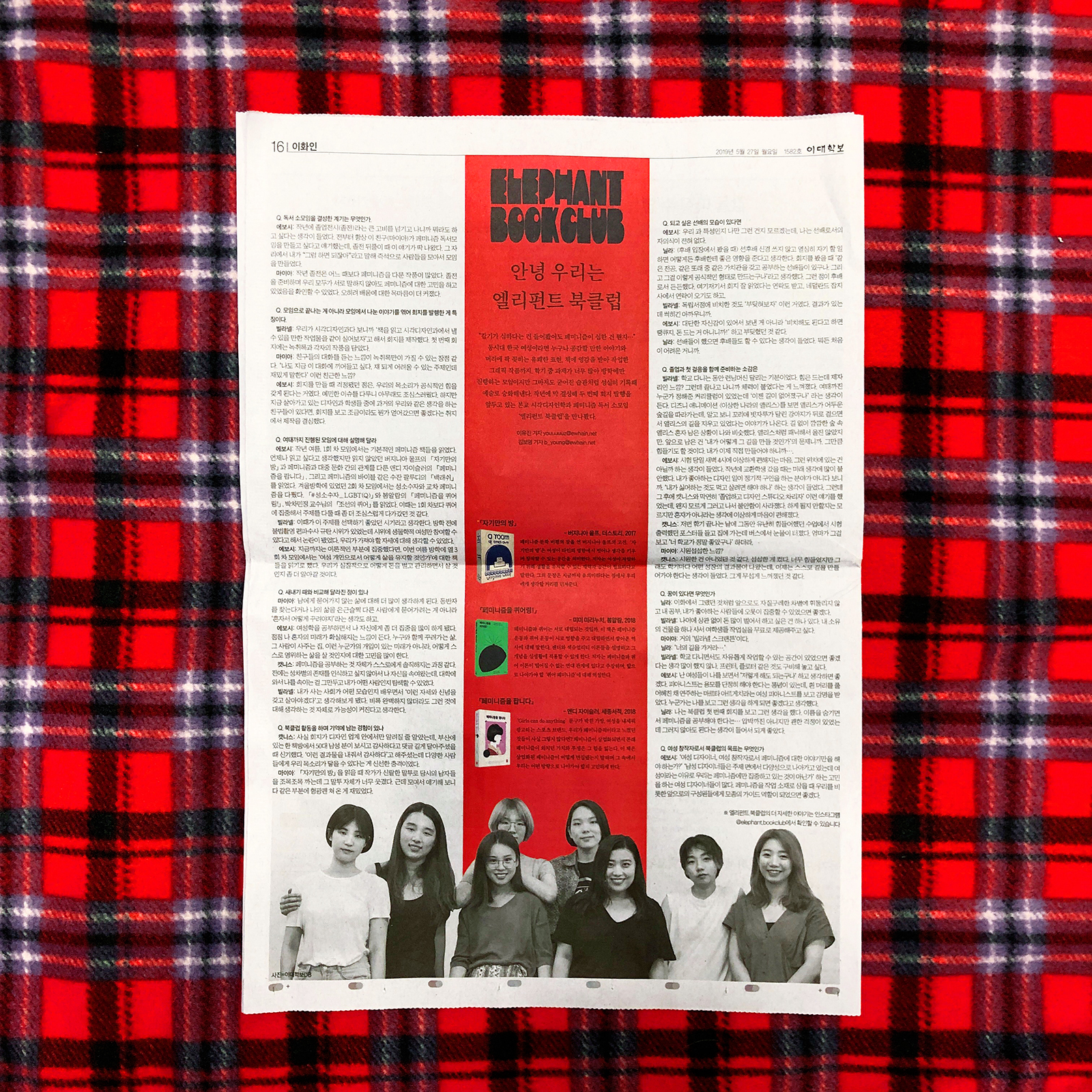
The group stands out for publishing a journal of their discussions rather than just meeting.
Villanelle: Being visual design students, we decided to combine our readings with design work that we could produce in our department. Our first journal included transcripts of our discussions alongside our individual artworks.
Maya: The transcript format has a unique advantage – it feels like you're listening to friends having a conversation. It creates this sense of ‘I want to join this discussion’ or ‘They’re making complex topics so accessible.’
Eboshi: When creating the journal, we were concerned about our voices taking on official authority, especially given the sensitive issues we discuss. However, we decided to proceed with the publication hoping that if there are current design students thinking like we once did, they might find something valuable in our journal.
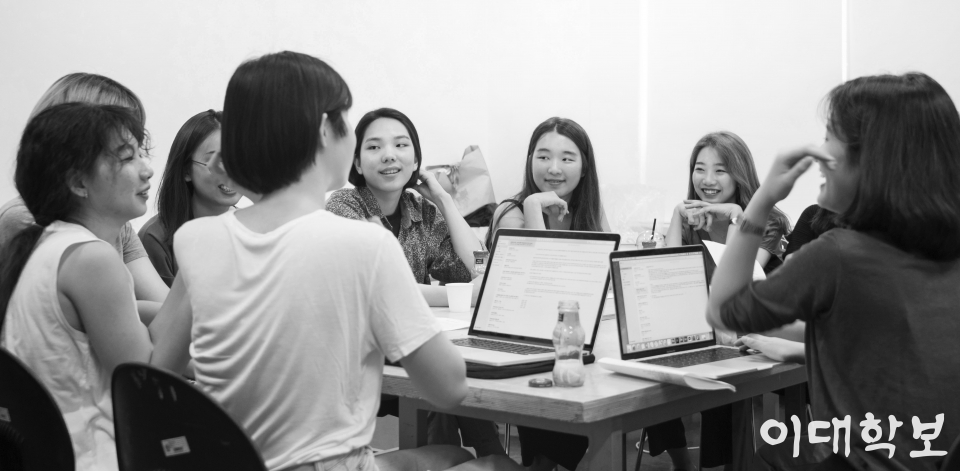
Tell us about your reading circle's journey so far.
Eboshi: Last summer, during our first meeting, we focused on foundational feminist texts. We read Virginia Woolf’s ‘A Room of One's Own’ - a book I’d always wanted to read but never had - along with Andi Zeisler’s ‘We Were Feminists Once’ about feminism's relationship with pop culture, and Susan Faludi’s ‘Backlash,’ which is often considered the feminist bible. For our second meeting during winter break, we explored LGBTQ+ issues and intersectional feminism. We read ‘#LGBTQ,’ Spring Alarm's ‘Queering Feminism!’ and Professor Park Min-jung Cha’s ‘Queer in Chosun.’ We approached these topics more carefully than our first session, given their complexity.
Villanelle: The timing felt right for these topics. Just before the break, there had been protests against biased investigations of spy cam crimes, which became controversial when only cisgender women were allowed to participate. It really made us think about what stance we should take.
Eboshi: While we’ve focused on theory until now, for our third meeting this summer, we’re shifting to more practical concerns − specifically, how to maintain independence as women. We’ll be exploring concrete aspects like earning and managing money.
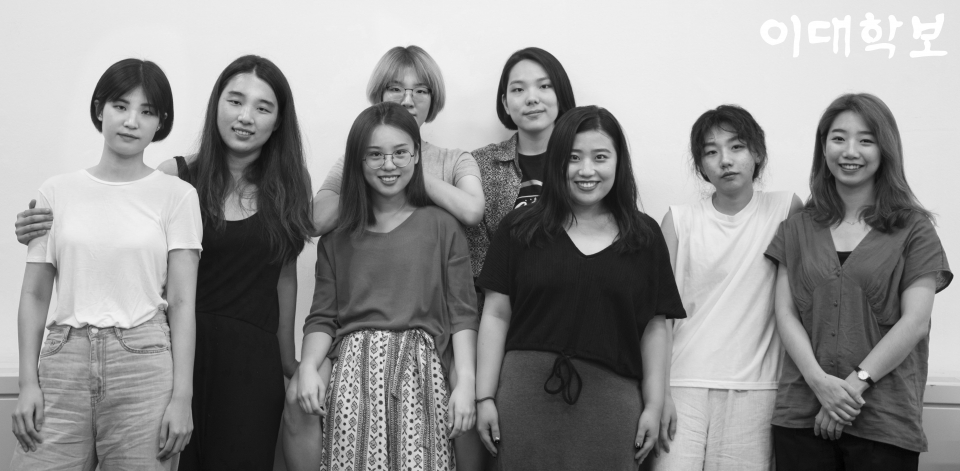
How have you changed since your freshman year?
Eboshi: Studying women’s studies has made me focus more on myself. I’m becoming more certain about my future as an individual. Rather than envisioning a life built around someone else − living together, having them buy me a house - I’m thinking about how to create a self-sufficient life.
Katniss: Studying feminism has been a process of becoming honest with myself. Before, I didn’t want to acknowledge the existence of gender discrimination, so I deceived myself. Coming to university allowed me to stop that self-deception and explore who I really am.
Villanelle: Learning about the society we live in has helped me develop the attitudes and beliefs I want to live by. Even if it’s not perfect, just thinking about these issues opens up new possibilities.
...